 Stop overpaying for supplies and get a $50 ALO gift card with a free analysis by 4/30
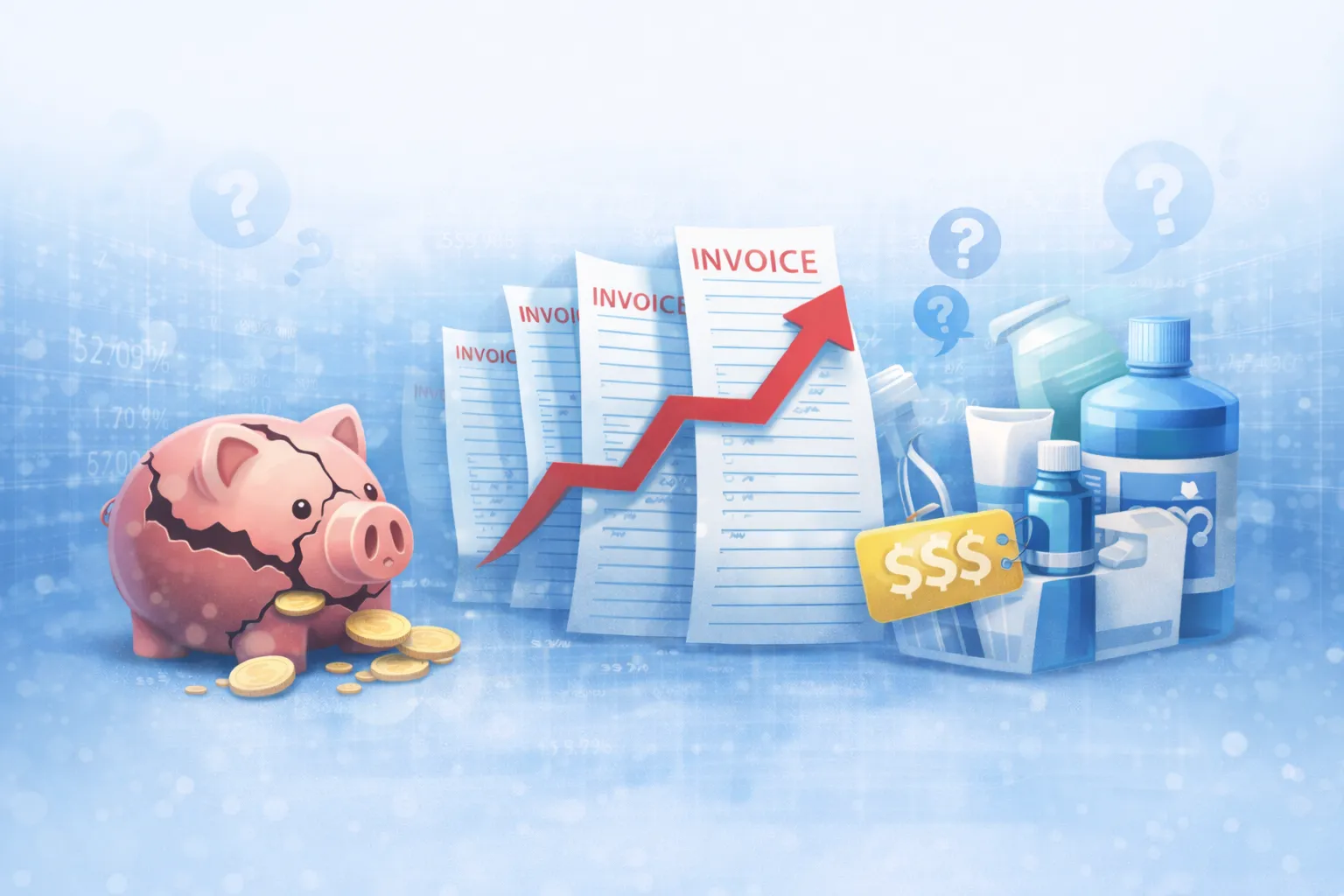
The Problem You Can’t See
At some point, most dental practices feel it. The invoices creep up. The explanations get fuzzy. And somehow, your supply spend keeps growing without your profits keeping pace. But the problem is most practices don’t think they have a “supply ordering problem.” They think rising overhead is just part of running a dental practice in 2026. It’s not. In today’s dental economy, clarity is power. Yet when it comes to supply pricing, most practices are operating in the dark. Pricing is notoriously opaque and inconsistent. Identical items can cost significantly more or less depending on:
- The supplier
- Your location
- Your rep relationship
- The time of year
- Whether you asked
Without benchmarks or visibility, it’s almost impossible to know whether you’re overpaying. So practices default to trust. And trust without data is expensive.
Why Supply Spend Quietly Erodes Profitability
Overhead pressures have intensified post-pandemic. Labor costs are up. Rent is up. Reimbursements are tighter. Patients are more price-sensitive. Most of those variables are hard to control. Supply spend isn’t. The average single-location practice spends around 7%+ of collections on supplies. Financially healthy practices typically aim for 4–6%. That 1–2% gap might not sound like much. But on a $1M practice, that’s $10,000–$20,000 per year quietly leaving your bottom line. There’s rarely one dramatic red flag. Instead, it’s a slow bleed:
- Small price increases across hundreds of products
- 15–30% price swings on identical products
- Backorders forcing emergency purchases at a markup
- Fragmented invoices across multiple vendors
- “Special pricing” that’s impossible to verify
Why It Feels So Hard to Fix
If this were easy, everyone would have solved it already. Dental practices are uniquely vulnerable to supply lock-in:
1. You’re Busy
Healthcare is your expertise. Supply optimization isn’t supposed to be. Doctors are focused on patients. Office managers are juggling staff, vendors and operations. No one has time to manually compare prices across suppliers.
2. The System Is Opaque
Pricing lives in a black box. You’re told your rates are competitive. Maybe even “the best available.” But without neutral benchmarks, there’s no way to verify that claim. So reassurance replaces data.
3. Fear-Based Messaging Freezes Change
Many practices are subtly warned:
- “Changing purchasing behavior could impact warranties.”
- “You may lose service priority.”
- “That product won’t perform the same.”
Sometimes those claims are valid. Often they’re exaggerated or conditional. Feeling stuck doesn’t mean you’re doing anything wrong. It means the system is doing exactly what it was designed to do by making you feel “locked in” to certain prices with no other option.
Not All Supplier Models Are the Same
Different supplier models come with tradeoffs: Traditional distributors
- Pros: Relationships, service history
- Risks: Price creep, loyalty traps, commission-driven incentives, lack of price transparency
Consolidated platforms
- Pros: Multi-supplier comparison, centralized visibility, spend tracking
- Risks: Requires a mindset shift from traditional habits
Online retailers
- Pros: Low sticker prices
- Risks: Shipping delays, poor communication, unreliable backorder alerts
Group Purchasing Organizations (GPOs)
- Pros: Negotiated discounts
- Risks: Membership fees, limited flexibility, vendor restrictions
What Financially Healthy Practices Do Differently
Controlling supply costs doesn’t mean cutting corners. It means:
1. Tracking Supply Spend as a % of Revenue
Pull your last 12 months of supply spend. Divide it by gross collections. Are you at 4–6%? Or creeping toward 7–8%?
2. Comparing Prices Across Suppliers
15–30% variation on identical products is common. Manually comparing prices is tedious so most teams don’t. That’s where overpayment becomes the norm.
3. Using Transparency Tools
Practices that implement price comparison and spend analytics tools report significant savings without sacrificing quality or reliability. The shift isn’t dramatic. It’s data-driven.
The First Step Is Clarity
Before making any changes, start with one question: Do you actually know what you’re paying and whether it’s competitive? If the answer is “not really,” you’re not alone. Supply spend is one of the most flexible levers in your practice. But you can’t optimize what you can’t see. The Torch Dental Rate My Pricing Calculator gives you a fast, data-backed way to understand whether your current pricing is competitive — or quietly costing you more than it should. No commitments. No vendor switching required. Just clarity. Because once you can see the numbers clearly, better decisions get a lot easier. Try the Torch Dental Rate My Pricing Calculator and find out where you really stand.